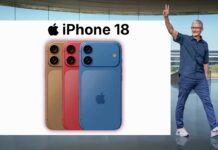
Apple is no longer just building products—it’s carefully constructing a system designed to make you spend more than you ever planned, and the rumored iPhone Ultra sits at the very top of that system. What looks like innovation on the surface is starting to feel more like calculated pressure underneath. This information is also featured on 9to9trends’ YouTube channel, so be sure to check it out.

According to reports from Mark Gurman, Apple is preparing an entire wave of “Ultra” devices, including an iPhone Ultra, MacBook Ultra, and AirPods Ultra. But instead of solving real user problems or pushing meaningful boundaries, this move appears to be about stretching the price ceiling higher than ever before. The idea is simple but powerful: introduce a new top-tier product so expensive that everything below it suddenly feels reasonable—even when it isn’t.

- The Best of the Best. SHIELD TV delivers an…
- Dolby Vision – Atmos. Bring your home theater to…
- Best-In-Class Design. Designed for the most…
- Unlimited Entertainment. Enjoy the most 4K HDR…

The Pricing Ladder That Quietly Pushes You Up
Apple’s real genius isn’t hardware anymore—it’s pricing psychology. The company has perfected what can only be described as a “pricing ladder,” where each step feels small enough to justify, but collectively leads you far beyond your original budget. This system is already visible in Apple’s current lineup. Take the Apple Watch as a clear example. You begin with the SE model, priced around $249, which already delivers more than enough for the average user.
But then comes the Series model, offering a slightly better display and updated design for a bit more. Add cellular? That’s another jump. Want a more durable build like titanium? You’re paying even more. By the time you reach the Ultra version, priced near $800, the jump doesn’t feel shocking anymore—it feels logical. And that’s exactly the trap.
The problem here is not choice—it’s manipulation. These upgrades aren’t always meaningful enough to justify the price increases, but they’re positioned in a way that makes you feel like you’re missing out if you don’t go one step higher. It’s no longer about buying what you need. It’s about being subtly guided toward what Apple wants you to buy.
iPhone Ultra: Innovation or Just Another Price Jump?
Now, Apple is reportedly applying this same formula to its most important product—the iPhone. The rumored iPhone Ultra, which could actually be Apple’s first foldable device, is expected to carry a shocking price tag of around $2,400. That’s not just expensive—it’s a completely new level of pricing for smartphones. And while foldable technology may sound exciting, the question remains: does it really justify doubling the price of a Pro Max model?
Leaks suggest that the iPhone Ultra could feature a wider aspect ratio, possibly allowing for improved multitasking, maybe even something similar to iPad-style functionality. But here’s the issue—these are not groundbreaking necessities. They’re incremental enhancements being packaged as revolutionary features. Apple isn’t solving a problem users are desperately asking to fix. Instead, it’s creating a premium category where the main selling point is simply being the most expensive and “advanced” option available.
And Apple knows exactly what it’s doing. The iPhone Ultra is not expected to sell in massive numbers. That’s not the goal. The goal is perception. Once a $2,400 iPhone exists, suddenly a $1,200 or $1,400 Pro Max doesn’t seem outrageous anymore. It feels like the smart choice. That shift in mindset is where Apple wins—not through volume, but through influence.
- ✅ 160 Watt Output – Experience powerful,…
- ✅ 2.1 Channel with Wired Subwoofer – Enjoy…
- ✅ Integrated DSP (Digital Signal Processor) –…
- ✅ Bluetooth V5.3 Connectivity – Equipped with…
The Domino Effect Across Apple’s Ecosystem
This strategy doesn’t stop with the iPhone. It’s spreading across Apple’s entire ecosystem. The MacBook lineup, for example, is rumored to receive a MacBook Ultra variant priced above $3,000. This model could include features like an OLED display, a thinner design, and next-generation chips like the M6 Pro and M6 Max. On paper, that sounds impressive. But in reality, most users will never need that level of power or those features. It’s overkill disguised as innovation.
The same pattern is emerging in audio products. According to Ming-Chi Kuo, Apple is exploring AirPods Ultra, which could introduce features like built-in cameras for spatial awareness and a new H3 chip for improved performance. But again, the question arises—are these features actually useful, or are they just being added to justify a higher price tier? Most users don’t need cameras in their earbuds. They need reliable audio, good battery life, and comfort. Everything beyond that starts to feel unnecessary. Apple is no longer simplifying technology for users. It’s complicating choices to maximize revenue.
- TWS earbuds with TruTalk AI-ENC (Environmental…
- Low-Latency Movie/Music Mode; Ergonomic &…
- Dynamic Drivers for Natural Sound; Advanced…
- Control Music/Calls thru Touch on the Earbuds;…
Power You Don’t Need, But Might Still Pay For
Even Apple’s chip strategy reflects this same mindset. The introduction of Ultra chips, like the rumored M5 Ultra, pushes performance to levels that most users will never fully utilize. For everyday tasks—even for professional workloads—chips like the M5 Pro or M5 Max are already more than sufficient. In some cases, they deliver performance that’s nearly identical in real-world use. Yet, many users will still choose the Ultra version.
Why? Because of the label. Because it represents the “best.” Apple understands that people don’t just buy based on need—they buy based on perception, status, and future-proofing. And the Ultra branding taps directly into that mindset. The result is a product lineup where the most expensive option becomes a psychological anchor, pulling everything else upward. You may not need the Ultra chip, but once you see it, everything below it starts to feel like a compromise.
- 𝗕𝗘𝗦𝗧 𝗜𝗡 𝗖𝗟𝗔𝗦𝗦…
- 𝗧𝗘𝗖𝗛…
- 𝗜𝗡𝗖𝗟𝗨𝗗𝗘𝗦: Mechanism Type:…
- 𝗔𝗦𝗦𝗘𝗠𝗕𝗟𝗬: Green Soul…
From Simplicity to Strategic Complexity
What makes this shift even more noticeable is how far Apple has moved away from its original philosophy. During the Steve Jobs era, Apple’s product lineup was simple and easy to understand. There was a clear structure—consumer vs. professional, desktop vs. portable. You knew exactly what you were buying and why. Today, that clarity is gone. In its place is a complex web of options, upgrades, and tiers that often overlap and blur together. Even something as basic as choosing storage can push you into the price range of a higher model. You start by upgrading storage, then realize you’re close to the next tier, and suddenly, you’re spending far more than you intended. This isn’t accidental. It’s designed.
- Active Noise Cancellation reduces unwanted…
- Adaptive Transparency lets outside sounds in while…
- Personalised Spatial Audio with dynamic head…
The Real Purpose of the iPhone Ultra
The iPhone Ultra is not just another product—it’s a strategic tool. It exists to redefine what “expensive” means in Apple’s ecosystem. It raises the ceiling so that everything below it feels more acceptable. It’s not about selling millions of units. It’s about reshaping how customers think about value. Expected to launch sometime around late 2026 or early 2027, the iPhone Ultra will likely arrive with premium materials, experimental features, and a price tag that pushes boundaries. But beneath all of that, its true role is much simpler—it’s there to make you spend more, even if you never buy it.
- 360-Degree Rotating Stand: Enjoy complete freedom…
- Flexible Viewing Angles: Easily adjust to multiple…
- Fully Collapsible Design: Compact and collapsible,…
- Effortless Charging: Features a special cutout at…
A Future Where Spending More Feels Normal
Apple’s Ultra strategy marks a clear turning point. The company is no longer just competing on innovation—it’s competing on how effectively it can guide user decisions. More tiers, more options, more upgrades—all leading in one direction: higher spending. The danger here isn’t just the price of the iPhone Ultra. It’s the normalization of these prices across the entire lineup.
What seems shocking today could feel standard tomorrow. And once that shift happens, there’s no going back. The real question isn’t whether the iPhone Ultra will succeed. It’s whether users will recognize what it truly represents. Because in this new era of Apple, the biggest upgrade isn’t happening in hardware—it’s happening in how the company convinces you to pay for it.
- Processor: Intel Core i7-13620H | Speed: 2.4 GHz…
- Display: 15″ FHD IPS (1920×1080) | 300Nits…
- Memory and Storage: 16GB RAM LPDDR5-4800 | 512 GB…
- OS and Software: Windows 11 Home Single Language |…
Last update on 2026-03-26 / Affiliate links / Images from Amazon Product Advertising API