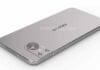
For years, the idea of a 16 inch iPad Ultra has lived in a strange space between fantasy and feasibility. Apple fans keep asking the same question again and again: will Apple ever create an iPad that truly goes beyond the current Pro lineup—something closer to a desktop-class workspace in tablet form? A device with a massive display, far beyond 13 inches, potentially running a Pro-tier Apple silicon chip. This information is also featured on 9to9trends’ YouTube channel, so be sure to check it out.

The short answer is simple but frustrating: Apple has clearly thought about it, tested it, and nearly shipped something like it before. And yet, here we are, still waiting. What’s changed now, however, is that the puzzle pieces—software, silicon, and usage—are finally starting to align in a way they never really did before.
Where the iPad Lineup Stands Today
To understand why the 16 Inch iPad Ultra discussion keeps resurfacing, you first have to look at where the iPad currently stands. Apple introduced the iPad back in 2009, and over the years, the product line has evolved dramatically. What began as a single-category device has branched into multiple identities: the standard iPad for mass-market users, the iPad mini for portability, the iPad Air for a balance of power and price, and the iPad Pro for professionals. Despite all that variety, the top tier of Apple’s tablet strategy still stops at two sizes: 11 inches and 13 inches.
At the high end, the iPad Pro is powered by Apple’s standard M-series chips, most recently the M5. These chips are undeniably powerful and sit well above what most tablets offer. However, there is still a noticeable ceiling. Apple has never placed a Pro-class chip—something like an M5 Pro or M6 Pro—inside an iPad. That distinction alone signals that Apple does not yet see the iPad as a full MacBook replacement, no matter how often the marketing implies it can be “your next computer.” The hardware is impressive, but it has always stopped just short of crossing that final line.

- 6500Pa Suction: T20s Pro with its powerful 6500Pa…
- Precision LiDAR Navigation: Equipped with LiDAR,…
- Vacuum and Mop for Better Results: With its hybrid…
- Smart Cleaning with App, and Voice Command: T20s…

Apple Already Came Close Before
What many people forget is that Apple has already flirted with the idea of a larger iPad in the past. Back in 2023, Mark Gurman reported that Apple was internally working on a 14-inch iPad, a device that came remarkably close to becoming reality. This was not casual speculation—it was described as being near launch-ready. At the time, it was widely assumed that this model could have been branded as an iPad Ultra, sitting above the Pro lineup in both size and capability. Then, without warning, it disappeared. No launch, no announcement, no explanation.
Since then, additional rumors have surfaced suggesting that Apple has explored even larger sizes, including displays stretching toward 16 inches, but once again, nothing has reached consumers. This repeated pattern tells us something important: Apple is not opposed to the idea of a massive iPad. Instead, something keeps holding it back. And that “something” has less to do with manufacturing or screen technology, and far more to do with the overall experience Apple wants to deliver.
- 4 Replaceable Plates for Office & Games MMO Mouse…
- 6 Levels DPI Adjustable Gaming Mouse The AULA H510…
- RGB Rainbow Streamer Backlight Effect Wired RGB…
- Ergonomic Design & Wide Compatibility RGB MMO…
Software Has Always Been the Real Limitation
For a long time, the biggest obstacle to a large iPad wasn’t hardware—it was software. The iPad spent many of its early years running what was essentially a scaled-up version of iOS. For a while, Apple didn’t even bother to separate the branding. Only in the last six to seven years did iPadOS become its own identity. Even then, multitasking felt limited, constrained, and somewhat artificial compared to macOS.
That reality is changing, slowly but noticeably. With the introduction of iPadOS 26, Apple took a meaningful step forward by enhancing window-based multitasking. Apps can now behave more like independent workspaces rather than fixed, rigid panels. On smaller displays, these improvements feel restricted. On an 11-inch iPad, there’s only so much room to work with. Even on the 13-inch models, multitasking finally becomes usable—but still not expansive. This is where the logic behind a 16 inch iPad Ultra becomes difficult to ignore. A display of that size would finally allow iPadOS’s newer windowing system to breathe naturally.
- 360-Degree Rotating Stand: Enjoy complete freedom…
- Flexible Viewing Angles: Easily adjust to multiple…
- Fully Collapsible Design: Compact and collapsible,…
- Effortless Charging: Features a special cutout at…
Why Size Actually Matters Now
Screen size is not just about visual impact. It directly affects how people work. On smaller iPads, advanced multitasking can quickly feel cramped, forcing constant resizing, switching, and compromises. With a significantly larger display, those compromises start to disappear. Multiple professional apps can exist side by side without feeling forced. Creative workflows involving drawing, editing, referencing, and managing assets simultaneously suddenly become realistic.
This is also why the iPad Ultra would not be marketed as a media consumption device. While watching movies or YouTube on a massive tablet sounds appealing, that would never justify Apple’s development costs. Instead, the real audience would be creators—designers, illustrators, editors, and professionals who rely heavily on the Apple Pencil. A larger canvas fundamentally changes how creative work feels, allowing more precision, better workflow visibility, and less friction overall.
- LARGE 1.83” HD DISPLAY WITH BRIGHT VISIBILITY…
- EXTENDED BATTERY LIFE FOR NON-STOP USAGE – Stay…
- BLUETOOTH CALLING ON YOUR WRIST – Smart watch…
- SMART AI VOICE ASSISTANT FOR HANDS-FREE CONTROL…
The Awkward Relationship With MacBooks
Of course, the moment you start talking about a 16 Inch iPad Ultra tablet, comparisons to MacBooks become unavoidable. If you attach a Magic Keyboard to an iPad Ultra and primarily use it with a keyboard and trackpad, it becomes difficult to argue against simply buying a 16-inch MacBook Pro or a 15-inch MacBook Air instead. This is where Apple faces a branding and strategy problem.
The iPad Ultra would need a clear identity. It cannot just be “a MacBook without macOS,” because that space already exists—and Apple has deliberately avoided collapsing those two product categories into one. This is why the pencil-focused, touch-first workflow matters so much. The Ultra iPad would need to excel at something MacBooks fundamentally don’t: direct, large-scale touch interaction combined with professional multitasking.
Hardware That Justifies the “Ultra” Name
If Apple ever releases an iPad Ultra, size alone will not be enough. A bigger display demands more power, and simply reusing the standard M-series chip would feel underwhelming. This is where speculation around Pro-tier chips comes in. The idea of an iPad running something like an M6 Pro or M7 Pro makes sense in this context. It would finally separate the Ultra from the regular Pro lineup in a meaningful way.
Thermal design also becomes relevant here. A larger body allows for better heat dissipation, opening the door for technologies like vapor chambers or even small internal fans. These features already exist in Apple’s laptops and could theoretically be adapted to a large tablet form factor. Without this kind of hardware leap, a 16 Inch iPad Ultra would risk feeling like an oversized accessory rather than a true flagship.
- Unique sound experience: The ergonomically…
- Long life noise control: For optimal on the go…
- Simplicity: Take advantage of the…
- In the box: 1x Jabra Elite 2 In Ear Wireless…
Foldables, Competitors, and Market Reality
There have also been rumors, notably from Ming-Chi Kuo, about Apple exploring a foldable iPad. While interesting, the usefulness of a foldable design remains questionable in this specific context. If people are already willing to carry a 16-inch MacBook Pro, portability is clearly not the main issue. A non-folding 16 inch iPad Ultra would already be acceptable for many professionals.
Competitors have proven that large tablets are viable. Samsung, for example, sells Ultra-sized tablets around the 14.5-inch range, and they have found a dedicated audience. These devices show that the form factor itself is not absurd. The real challenge for Apple lies in whether enough people are willing to pay for such a niche product.
The Business Risk Apple Can’t Ignore
Despite all the logic supporting an iPad Ultra, Apple still has to answer one critical question: Will it sell? The harsh reality is that the best-selling iPad is the cheapest one. Even though iPad Pro models perform well, they are not Apple’s volume drivers. An iPad Ultra would likely be expensive, specialized, and aimed at a relatively small audience. That makes it a risky investment, even for a company with Apple’s resources. This is likely why Apple remains cautious. Market research, usage data, and ecosystem readiness all need to align before such a product can move from prototype to production. Apple does not rush products out simply because they are technically possible. Timing matters.
- NEXLEV STEAM CLEANER: high-quality steam cleaning…
- POWERFUL STEAM TECHNOLOGY: 1000 W steam cleaner…
- MULTIPLE ATTACHMENTS: equipped with 9 specialized…
- QUICK HEAT-UP: The steam cleaner heats up rapidly,…
Release Window, Pricing, and Final Outlook
As of now, there is no confirmed launch for a 16 inch iPad Ultra in 2026, but the growing number of leaks and past near-misses suggest the idea is far from dead. If Apple does move forward, it would likely arrive sometime after 2026, once iPadOS matures further, and Pro-tier silicon becomes more practical in tablet form. Pricing would almost certainly exceed current iPad Pro models, pushing firmly into MacBook territory.
Ultimately, the iPad Ultra remains a 50/50 proposition. The software is finally catching up. The hardware potential is clearly there. The demand, however, is still uncertain. For creators who rely on Apple Pencil and crave a truly massive workspace, an iPad Ultra would solve a real problem. Whether that audience is large enough for Apple to commit remains the final unanswered question.
- Processor: 12th Gen Intel Core i5-1235U | Speed:…
- OS: Pre-Loaded Windows 11 Home with Lifetime…
- Graphics : Integrated Intel Iris Xe Graphics
- Display: 14″ WUXGA (1920×1200) | Brightness: 300…
Last update on 2026-08-21 / Affiliate links / Images from Amazon Product Advertising API