The iPhone 18 Pro Max is already being framed as a major step forward, but once you strip away the marketing language and look closely at what’s actually changing, the reality feels far less impressive. Instead of delivering bold innovation, Apple seems to be doubling down on safe, incremental updates while presenting them as something revolutionary. This pattern isn’t new—but with each passing year, it becomes harder to ignore. What should have been a defining upgrade is shaping up to be another carefully packaged iteration that leans more on perception than genuine progress. This information is also featured on 9to9trends’ YouTube channel, so be sure to check it out.
A Design That Feels Directionless
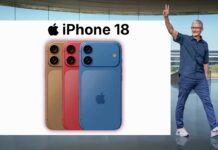
Apple has long been known for its clean, timeless design philosophy, but the rumored changes this time feel oddly disconnected from that legacy. The introduction of new color options like brown, purple, and burgundy might sound refreshing at first, but they also raise a serious question: Who exactly is this for? These aren’t universally appealing finishes; they feel experimental, almost forced. Even more confusing is the potential removal of classic black and white variants. For a premium flagship iPhone 18 Pro Max device, eliminating the most widely preferred and iconic color options doesn’t come across as bold—it comes across as tone-deaf.

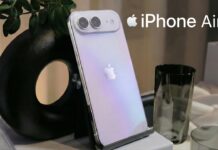
The rumored shift to a unified color back or a slightly translucent rear panel exposing elements like MagSafe isn’t particularly convincing either. It’s being framed as a design evolution, but in reality, it feels like a superficial attempt to make the device look different without truly improving anything. A translucent back might catch attention for a moment, but it doesn’t add real value to the user experience. Instead, it risks turning a premium device into something that feels more experimental than refined. Apple used to lead design trends; now it seems to be testing ideas without a clear direction.

- WHY IPAD PRO — iPad Pro is the ultimate iPad…
- iPadOS + APPS — iPadOS makes iPad more…
- FAST WI-FI CONNECTIVITY — Wi-Fi 6E gives you…
- PERFORMANCE AND STORAGE — The 8-core CPU in the…
Thicker Body, Minimal Gain
One of the more telling changes is the slight increase in thickness to accommodate a larger battery. On paper, that sounds reasonable—after all, better battery life is always welcome. But when you look deeper, it reveals a lack of efficiency progress. For years, Apple has emphasized how its chips and software optimization deliver industry-leading performance without needing larger batteries. Now, the solution appears to be simply making the iPhone 18 Pro Max thicker.

The expected iPhone 18 Pro Max battery improvement is modest, not groundbreaking. Users aren’t getting a dramatic leap in endurance; they’re getting a small boost that comes at the cost of added bulk. For a device that will sit at the very top of the pricing spectrum, this trade-off feels underwhelming. It suggests that Apple is hitting limits in optimization and is quietly shifting toward more traditional solutions—something it once avoided.
The A20 Pro Chip: Familiar Promises, Limited Impact
Every year, Apple introduces a new chip with claims of better performance and efficiency, and the A20 Pro is no exception. Built on a rumored 2nm process, it represents a technical advancement over the current 3nm architecture. On paper, this is significant—smaller transistors typically mean iPhone 18 Pro Max faster speeds and lower power consumption.
- Display: 34″ Gaming (3440 x 1440) Wide Angle (178…
- Aspect Ratio: 21:9, Brightness:300 cd/m² ,…
- HDMI 2.0 x 2, Display Port 1.4 x 1, H/P Out
- VESA and Stand:100 x 100, Tilt, Height.

But here’s the problem: most users won’t feel the difference. Modern smartphones are already incredibly fast, and for everyday tasks like messaging, browsing, and social media, the performance ceiling has already been reached. The A20 Pro will likely excel in benchmarks and demanding workloads, but for the average user, it won’t change how the phone feels in daily use. This is where Apple’s strategy starts to feel repetitive. The company leans heavily on chip improvements to justify upgrades, but those improvements rarely translate into meaningful real-world benefits. It’s a cycle of impressive numbers that don’t significantly impact the user experience.
Connectivity Upgrades That Sound Better Than They Are
The introduction of the C2 modem and expanded satellite connectivity is being positioned as a major step forward, but the practical value of these features is questionable. Improved iPhone 18 Pro Max 5G speeds and better power efficiency are welcome, but they’re expected at this point—not groundbreaking.

The real focus is on satellite capabilities, which are rumored to expand beyond emergency use. Messaging, limited browsing, and even low-resolution streaming without traditional network coverage sound impressive, but the reality is far less exciting. Satellite connections are inherently slower, less reliable, and heavily restricted. These features will likely be used only in very specific situations, making them more of a backup option than a daily convenience. Once again, Apple seems to be emphasizing iPhone 18 Pro Max features that sound futuristic but have limited practical impact. It’s innovation on paper, not in everyday life.
- Powerful Sound: Liven up your watch parties with…
- 2.0 Channel Subwoofer: Stay engrossed in…
- Multichannel Connectivity: Indulge in music with a…
- USB Type-C Charging Port: You no longer have to…
A Front Design Still Searching for Identity
The front of the iPhone has been in a state of transition for years, and the iPhone 18 Pro Max doesn’t appear to resolve that. Whether it’s a smaller Dynamic Island or partial under-display sensors, the goal is clear: reduce visual clutter. But the fact that Apple is still experimenting suggests it hasn’t fully figured out the solution. A cleaner display should have been achieved by now, especially for a device at this level. Instead, users are getting incremental adjustments that slowly move toward a full-screen experience without ever quite reaching it. It feels like a prolonged transition rather than a confident leap forward.
The upgrade to a 24MP selfie camera is another example of a spec increase that sounds impressive but may not deliver noticeable improvements for most users. Pixel binning and software processing will likely enhance image quality, but for everyday use, the difference will be subtle at best.
- PRODUCT DIMENSIONS: Chair Height (91.44 cm), Chair…
- FRAME MATERIAL: Office Rest Chair with arm support…
- COLOR: The elegant black color of this chair adds…
- COMFORTABLE: The System Chair back support are…
iPhone 18 Pro Max Camera Changes That Feel Like Catch-Up
Perhaps the most significant rumored change is the shift from Sony to Samsung for the main camera sensor. This could introduce new technologies, including stacked sensors and possibly improved dynamic range. However, this move doesn’t feel like Apple leading the industry—it feels like Apple catching up. Variable aperture is another addition that sounds promising, offering more control over depth and lighting. But this isn’t new technology. Competitors have already explored it, and Apple’s adoption now feels delayed rather than innovative.

The question isn’t whether these features will improve the camera—they likely will. The question is why it took this long. Apple has built its reputation on being ahead of the curve, but this time, it seems to be following trends rather than setting them.
Fixing Problems Apple Created
One of the more revealing details is the potential redesign of the capture button, which has reportedly been expensive to repair. While making it easier and cheaper to fix is a positive step, it also highlights a recurring issue: Apple often introduces complex components that drive up repair costs, only to later “improve” them. This cycle raises concerns about priorities. Instead of focusing on durability and user-friendly design from the start, Apple appears to be optimizing after the fact. It’s a reactive approach rather than a proactive one.
Premium Price, Questionable Value
With a starting price expected around $1,199 and a likely launch in September 2026, the iPhone 18 Pro Max will firmly sit in the ultra-premium category. At that price point, expectations are incredibly high—and rightfully so. But based on current leaks, it’s hard to justify the cost. The upgrades, while real, feel incremental. The design changes are subtle and somewhat questionable. The performance improvements are unlikely to be noticeable for most users. And many of the new features seem more experimental than essential. When you combine all of this, the value proposition starts to weaken. This isn’t a device that redefines what a smartphone can do—it’s a device that slightly refines what already exists.
The Bigger Picture: A Pattern That’s Hard to Ignore
The iPhone 18 Pro Max doesn’t exist in isolation. It’s part of a broader trend where each new generation offers smaller improvements while maintaining or increasing the price. Over time, this approach begins to feel less like innovation and more like stagnation. Apple is no longer just competing on technology—it’s competing on perception. The challenge is convincing users that incremental changes are worth premium prices. For some, that may still be enough. But for others, the gap between expectation and reality is becoming harder to ignore.
- [Connectivity]: Enjoy a seamless gaming experience…
- [Keys on the keyboard]: The keyboard with 104 keys…
- [Outlook]: The ZEB-Transformer Pro keyboard has an…
- [Power-saver]: Conserve the energy with the…
Final Thoughts: More of the Same, Just Slightly Different
At the end of the day, the iPhone 18 Pro Max doesn’t feel like a breakthrough device. It feels like a continuation of a strategy that prioritizes consistency over bold innovation. While there’s nothing inherently wrong with refinement, there comes a point where it’s no longer enough—especially at this price level. What we’re seeing here is a device that improves in small ways while avoiding big risks. It’s safe, predictable, and polished—but it’s not exciting. And for a product that once defined the future of smartphones, that’s perhaps the biggest disappointment of all.
- The Best of the Best. SHIELD TV delivers an…
- Dolby Vision – Atmos. Bring your home theater to…
- Best-In-Class Design. Designed for the most…
- Unlimited Entertainment. Enjoy the most 4K HDR…
Last update on 2026-03-26 / Affiliate links / Images from Amazon Product Advertising API