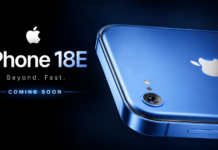
For years, the foldable smartphone market has moved forward without any participation from Apple. While other manufacturers aggressively experimented with flexible displays, hinge designs, and new device categories, Apple remained unusually quiet. Now, after years of speculation, fresh leaks suggest that the company may finally be preparing to release its first iPhone Fold. But instead of creating excitement, these new reports raise a different and far more uncomfortable question: Did Apple wait too long? This information is also featured on 9to9trends’ YouTube channel, so be sure to check it out.

According to recent reports from industry insiders, Apple’s iPhone Fold could debut this fall alongside the upcoming iPhone 18 Pro and iPhone 18 Pro Max. On the surface, this sounds like a major moment for the smartphone industry. Apple’s entering the foldable market should be a big deal. But when you look closer at the leaks, the situation begins to feel less revolutionary and more like Apple reluctantly catching up to a trend that has existed for years.

For nearly a decade, companies like Samsung have dominated the foldable space, launching multiple generations of devices and constantly refining the technology. iPhone Fold is no longer an experimental concept. They are established products with real customers and mature designs. Apple stepping into this category now does not feel like bold innovation. Instead, it feels like the company is slowly responding to a market that moved ahead without it.

- WHY IPAD PRO — iPad Pro is the ultimate iPad…
- iPadOS + APPS — iPadOS makes iPad more…
- FAST WI-FI CONNECTIVITY — Wi-Fi 6E gives you…
- PERFORMANCE AND STORAGE — The 8-core CPU in the…
Hardware Leaks Show Familiar Specifications
One of the most discussed leaks surrounding Apple’s iPhone Fold is its hardware configuration. According to reports, the device could feature 12GB of RAM. In theory, this would place it on the same level as Apple’s Pro-series smartphones in terms of memory power. But in reality, this specification hardly feels groundbreaking anymore.
Many flagship phones across the industry already offer similar or even higher RAM configurations. The situation becomes even more ironic when you consider where that memory might come from. Reports claim that the 12GB LPDDR5X RAM chips inside Apple’s foldable device may actually be supplied by Samsung. In other words, Apple’s biggest rival in the foldable smartphone market could end up providing a key internal component for Apple’s own device.
- Display: 34″ Gaming (3440 x 1440) Wide Angle (178…
- Aspect Ratio: 21:9, Brightness:300 cd/m² ,…
- HDMI 2.0 x 2, Display Port 1.4 x 1, H/P Out
- VESA and Stand:100 x 100, Tilt, Height.

This highlights a strange dynamic in the smartphone industry. Apple may finally be entering the foldable category, but it might still depend on the very company that built the market in the first place. Instead of dominating with completely independent technology, Apple could be assembling its devices using components from the same ecosystem that its competitors rely on.

Storage options for the iPhone Fold were revealed by well-known leaker Instant Digital. According to his information, the device may launch with three storage tiers: 256GB, 512GB, and 1TB. While these options sound respectable, they are also surprisingly conservative for a device that will likely carry an extremely high price tag. Some of Apple’s previous Pro Max models have experimented with even larger storage capacities, including 2TB options. The decision to limit the iPhone Fold to a maximum of 1TB could make the device feel less premium than expected, especially considering that foldable phones are typically positioned as the most advanced devices in a company’s lineup.
- Powerful Sound: Liven up your watch parties with…
- 2.0 Channel Subwoofer: Stay engrossed in…
- Multichannel Connectivity: Indulge in music with a…
- USB Type-C Charging Port: You no longer have to…
A Design Inspired by Existing Foldables
Design leaks have also revealed some surprising choices that raise further questions about Apple’s strategy. According to reports from a reliable tipster with a strong track record, Apple may adopt a landscape-first design similar to the approach used by the Huawei Pur X from Huawei. This means that when the device unfolds, it would become wider than it is tall, creating an experience closer to opening a small tablet than using a traditional smartphone. The unfolded display could resemble the size and shape of a compact tablet, somewhat similar to the experience offered by an iPad Mini.

While this concept could offer benefits for productivity and media consumption, it also reinforces the idea that Apple is not necessarily reinventing the foldable category. Instead, it may simply be adapting design ideas that other manufacturers have already explored.
For a company that built its reputation on redefining product categories, this approach feels surprisingly cautious. Apple’s first foldable phone might not introduce a bold new vision for foldables. Instead, it may simply refine an existing concept that has already been tested by competitors.
- PRODUCT DIMENSIONS: Chair Height (91.44 cm), Chair…
- FRAME MATERIAL: Office Rest Chair with arm support…
- COLOR: The elegant black color of this chair adds…
- COMFORTABLE: The System Chair back support are…
Apple’s Long Battle With the Display Crease
One of the biggest technical challenges in foldable phones is the visible crease that appears where the display folds. Every foldable phone released so far has struggled with this issue to some extent. The crease is a natural result of bending a flexible screen repeatedly.
Reports suggest that Apple spent years attempting to minimize this problem before releasing its own foldable device. Engineers reportedly focused heavily on reducing the visibility of the fold line. According to insiders, the crease on Apple’s foldable iPhone may be “almost invisible.”
However, this claim should be approached with caution. Physics still imposes limits on flexible display technology. Completely eliminating the crease may simply not be possible with current materials and engineering techniques. If Apple’s device still contains even a faint crease, the years of delay might suddenly appear far less justified. After all, if Apple waited this long to release a foldable phone, expectations will naturally be extremely high. Delivering a device that still suffers from the same compromises as earlier foldables could be disappointing.
iPhone Fold Display Sizes and Build Materials
Additional hardware information comes from leaker Shia Cohen, who shared more details about the device’s displays and construction. According to his claims, the iPhone Fold may feature a 5.3-inch outer display and a larger 7.6-inch inner foldable screen. This combination would allow the phone to function as a compact smartphone when closed and transform into a tablet-like device when opened. The size of the inner screen would place it in direct competition with other foldable phones already available on the market.

The device’s construction may combine a titanium frame with an aluminum body. Titanium has recently become a signature material in Apple’s premium smartphones, and its inclusion here suggests Apple is attempting to balance durability with lightweight design. One particularly striking rumor involves the thickness of the device. When unfolded, the phone could measure just 4.5 millimeters thick. If accurate, this would make it one of the thinnest foldable smartphones ever created.
- [Connectivity]: Enjoy a seamless gaming experience…
- [Keys on the keyboard]: The keyboard with 104 keys…
- [Outlook]: The ZEB-Transformer Pro keyboard has an…
- [Power-saver]: Conserve the energy with the…
While that sounds impressive, extremely thin devices sometimes raise concerns about structural strength and battery capacity. Another surprising rumor suggests that Apple may abandon Face ID on this device and return to Touch ID instead. Face ID has been one of Apple’s most recognizable security technologies for years, so replacing it with a fingerprint sensor would represent a significant design shift.
Read also:
- iPhone 18e Could Be Apple’s Most Frustrating iPhone Yet
- iPad 12 Could Be Apple’s Most Exciting Affordable iPad Yet
- Apple Glasses 2026: Apple’s Next Big Innovation or Another Overpriced Accessory?
iPhone Fold Battery and Camera Details
Battery life could be another important aspect of the iPhone Fold. Leaks indicate that the device may include a large 5,600mAh battery. On paper, that sounds promising, especially considering that foldable phones often struggle with power efficiency due to their large displays.
However, real-world performance will depend on how Apple optimizes the device’s software and display technology.
A larger battery alone does not guarantee longer battery life, especially in devices with power-hungry flexible screens. Leaked CAD renders have also revealed a punch-hole camera located in the top-left corner of the inner display. This design choice may help Apple maximize screen space while still providing a front-facing camera for video calls and selfies. Yet even here, the design feels familiar rather than revolutionary. Punch-hole cameras have been widely used in the smartphone industry for years.
- The Best of the Best. SHIELD TV delivers an…
- Dolby Vision – Atmos. Bring your home theater to…
- Best-In-Class Design. Designed for the most…
- Unlimited Entertainment. Enjoy the most 4K HDR…
Premium Pricing Raises Serious Concerns
Perhaps the most controversial detail surrounding Apple’s foldable phone is its rumored price. According to information shared by Instant Digital, the device could launch in China with prices of 15,999 yuan, 17,999 yuan, and 19,999 yuan depending on storage. When converted to global pricing estimates, this could translate to approximately $1,999 for the 256GB model, $2,199 for the 512GB version, and around $2,399 for the 1TB variant.
These numbers place Apple’s foldable device among the most expensive smartphones ever released. While foldable phones are typically priced at a premium, Apple’s pricing strategy may push the limits of what many consumers are willing to pay. Charging such high prices might only be justified if the device introduces groundbreaking innovation. But based on current leaks, the iPhone Fold appears to offer improvements that feel evolutionary rather than revolutionary.
A Device Arriving Years After the Trend Began
If the current reports prove accurate, Apple could officially reveal its first iPhone Fold around September during the same event that introduces the iPhone 18 Pro lineup. This timing would mark Apple’s first serious entry into a category that has already evolved through several generations of competing devices. For many observers, the biggest question is not whether Apple can build a foldable phone. The company clearly has the resources and engineering talent to do so.
The real question is whether Apple can deliver something that truly justifies the years of delay. Entering a market late is not always a problem if the final product dramatically improves the experience. But if Apple’s iPhone Fold simply matches what other companies already achieved years earlier, the launch could feel less like a revolution and more like a delayed response to an industry trend. After nearly a decade of waiting, expectations are enormous. Apple’s first foldable iPhone will not only need to compete with existing foldable devices — it will need to prove that the company’s long silence actually led to something worth the wait.
Last update on 2026-08-21 / Affiliate links / Images from Amazon Product Advertising API