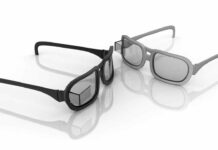
Apple may finally be preparing to release something it has talked about for years: augmented reality glasses meant for everyday use. But calling Apple Glass 2026 a bold step forward would be generous. According to leaks, Apple Glass 2026 is shaping up to be the year Apple cautiously tiptoes into AR wearables—not to redefine the category, not to shock the industry, but to quietly secure territory before someone else makes Apple look irrelevant. This is not Apple chasing the future. This is Apple making sure it doesn’t miss it entirely. This information is also featured on 9to9trends’ YouTube channel, so be sure to check it out.

Apple Glass is not positioned as a successor to Vision Pro, and that’s no coincidence. Vision Pro was ambitious, expensive, heavy, and niche—and Apple knows it. Instead of doubling down on immersive computing, Apple appears to be retreating to something safer, smaller, and far less threatening to the average consumer. Apple Glass 2026 is being framed as a new category, but in reality, it feels more like a strategic correction after Vision Pro proved that most people don’t want to live inside a headset.

- Beoplay H95 offer exceptional sound quality…
- Bang & Olufsen Signature Sound
- Expertly crafted using premium materials, Beoplay…
- Beoplay H95 deliver a perfect balance between…
No Immersion, No Risk, No Real Leap
Unlike Vision Pro, Apple Glass will not surround users with digital worlds or virtual spaces. There will be no immersive screens, no reality replacement, no bold vision of spatial computing dominating daily life. The real world remains untouched, with only light visual overlays layered on top. Apple wants AR without the discomfort, without the backlash, and without the learning curve.
But that restraint is also the product’s biggest weakness. This isn’t Apple pushing boundaries—it’s Apple deliberately avoiding them. Competitors have already tried this approach, promising subtle overlays and ambient information, and the results have been mixed at best. Apple isn’t reinventing the concept; it’s polishing an idea others struggled to make compelling, hoping better execution will cover for a lack of ambition. Apple Glass 2026 sounds less like a technological leap and more like a carefully controlled experiment designed to fail quietly if necessary.
- Black, Mid- Tower, 445 x 285 x 410 mm, Tempered…
- 7 Expansion Slots, 2 x 2.5” Drive Bay
- I/O Panel : 2 x USB 3.0, 1 x Type-C, Audio In, 1 x…
- Fan Support : 3 x 120mm / 2 x 140mm Top, 3 x 120mm…
Apple Intelligence and Siri: Big Promises, Familiar Doubts
At the core of Apple Glass 2026 is Apple Intelligence and Siri, a pairing that sounds impressive in marketing slides but raises serious questions in reality. Leaks suggest visual intelligence will allow users to look at objects, landmarks, or unfamiliar items and instantly ask Siri what they’re seeing. On paper, this feels futuristic. In practice, it relies on Siri suddenly becoming reliable, fast, accurate, and context-aware—traits it has consistently struggled to deliver.
Apple is asking users to trust that Siri will correctly identify the world around them, respond instantly, and do so without embarrassing mistakes. That’s a tall order for an assistant who still fumbles basic queries on iPhones. Turning “curiosity into something frictionless” only works if the technology behind it isn’t constantly interrupting that flow with errors, delays, or misinterpretations. This isn’t just an AR problem. It’s a Siri problem Apple still hasn’t convincingly solved.
Academic and Professional Use: Ambitious Claims, Questionable Reality
Apple Glass 2026 is also rumored to target students and professionals by capturing lectures, meetings, and conversations, summarizing key points in real time, and displaying notes directly on the lens. Those notes would then sync to the Notes app for later editing, summarizing, or restructuring into tables and outlines.
Real-time summarization depends on near-perfect speech recognition, contextual understanding, and accuracy. Any errors—missed sentences, incorrect emphasis, or misunderstood terminology—undermine the entire value proposition. There’s also the uncomfortable question of privacy. Recording lectures, meetings, or conversations through glasses raises legal and ethical concerns that Apple will have to navigate very carefully.
- 6500Pa Suction: T20s Pro with its powerful 6500Pa…
- Precision LiDAR Navigation: Equipped with LiDAR,…
- Vacuum and Mop for Better Results: With its hybrid…
- Smart Cleaning with App, and Voice Command: T20s…

More importantly, this feature feels less like innovation and more like Apple forcing AR into productivity just to justify its existence. Instead of creating new workflows, Apple Glass 2026 appears to graft AR onto existing apps and habits, hoping novelty will make it feel transformative.
Navigation: Useful, but Late and Limited
Navigation overlays are another highlighted feature, with turn-by-turn directions appearing directly in the user’s line of sight, optimized for walking and cycling. This is arguably one of the most practical uses of AR—but it’s also one of the oldest promises in the smart glasses playbook.
Apple’s decision to avoid driving navigation due to safety concerns is sensible, but it also limits the impact of the feature. For pedestrians and cyclists, phones already provide excellent navigation. Apple Glass 2026 may make the experience slightly more convenient, but convenience alone doesn’t justify a new piece of hardware for most users. This isn’t a game-changer. It’s a quality-of-life improvement packaged as a headline feature because Apple needs one.
- 4 Replaceable Plates for Office & Games MMO Mouse…
- 6 Levels DPI Adjustable Gaming Mouse The AULA H510…
- RGB Rainbow Streamer Backlight Effect Wired RGB…
- Ergonomic Design & Wide Compatibility RGB MMO…
Apple Glass 2026 Camera That Exists, Not Cameras That Matter
Yes, Apple Glass 2026 will reportedly include cameras—but even Apple seems eager to manage expectations. These won’t come close to the iPhone Pro camera system, which immediately raises questions about their purpose. If they’re not good enough for serious photography or video, they exist mainly for context awareness, visual recognition, and basic capture.
That opens another can of worms: social acceptance. Glasses with cameras still make people uncomfortable, no matter how subtle Apple tries to make them. Without outstanding quality or a clear killer use case, the cameras feel like a liability Apple is including for long-term strategy rather than immediate value. Built-in speakers will handle music, calls, translation, and FaceTime audio—but none of these are new experiences. AirPods already do this better, privately, and without putting hardware on your face. Apple Glass doesn’t replace existing products here; it overlaps them.
- 360-Degree Rotating Stand: Enjoy complete freedom…
- Flexible Viewing Angles: Easily adjust to multiple…
- Fully Collapsible Design: Compact and collapsible,…
- Effortless Charging: Features a special cutout at…
Ecosystem Lock-In Disguised as “Lightweight Design”
Perhaps the most predictable leak of all: Apple Glass 2026 will heavily depend on the iPhone. Most processing will be offloaded to the phone via Bluetooth or Wi-Fi, keeping the glasses light and power-efficient. That sounds practical—until you realize what it really means. No iPhone, no Apple Glass. No Android support. No standalone capability.
This isn’t a wearable computer; it’s a peripheral extension of your phone. Apple isn’t selling freedom—it’s selling deeper dependence. This design choice keeps costs and weight down, but it also ensures Apple maintains total control. Users don’t own an independent device; they rent functionality through the ecosystem. For Apple, that’s a feature. For consumers, it limits flexibility and long-term usefulness.
- LARGE 1.83” HD DISPLAY WITH BRIGHT VISIBILITY…
- EXTENDED BATTERY LIFE FOR NON-STOP USAGE – Stay…
- BLUETOOTH CALLING ON YOUR WRIST – Smart watch…
- SMART AI VOICE ASSISTANT FOR HANDS-FREE CONTROL…
Design Flexibility: Necessary, Not Impressive
Leaks suggest Apple will offer multiple frame styles and prescription lens options, acknowledging that eyewear can’t be one-size-fits-all. This is sensible, but it’s also the bare minimum. Every smart glasses company that ignored this reality failed quickly. Apple deserves no special credit here. This isn’t visionary thinking—it’s Apple learning from the mistakes of others. Design variety may help adoption, but it doesn’t make the product more meaningful. It just makes it wearable without alienating everyone who doesn’t fit Apple’s default aesthetic.
Timeline, Pricing, and Lowered Expectations
Current leaks point to a WWDC 2026 announcement, followed by a release later that year or possibly early 2027. The extended timeline suggests Apple wants developers to build apps and experiences—but it also suggests the product itself may not feel complete at launch. Pricing is expected to land well below Vision Pro, likely under $1,000, possibly close to existing premium smart glasses.
That sounds reasonable only because Vision Pro reset expectations so badly. Under $1,000 is still expensive for a device that doesn’t replace your phone, laptop, or even your headphones. Apple Glass 2026 doesn’t need to fail to prove a point. It only needs to feel optional—and right now, everything about it suggests that’s exactly what it will be.
A Safe Product, Not an Important One
If Apple Glass 2026 succeeds, it won’t be because it redefined computing. It’ll be because Apple played it safe, controlled the narrative, and avoided embarrassing missteps. This isn’t the most important new Apple product of the decade. It’s a defensive move—designed to keep Apple relevant in a future it didn’t invent and is still afraid to fully embrace. Apple Glass isn’t bold. It isn’t disruptive. It’s cautious, controlled, and carefully limited. And that may be enough for Apple—but it’s far from the future people were promised.
- Unique sound experience: The ergonomically…
- Long life noise control: For optimal on the go…
- Simplicity: Take advantage of the…
- In the box: 1x Jabra Elite 2 In Ear Wireless…
Last update on 2026-08-21 / Affiliate links / Images from Amazon Product Advertising API